

How to Bounce Back Faster After Tough Workouts
Delayed Onset Muscle Soreness (DOMS) is something almost everyone has experienced. Whether you've just smashed a new PB, returned to the gym after time off, or tried a new training style, waking up feeling like you can barely walk is all part of the process.
The good news? While you can't completely eliminate DOMS, there are proven ways to support your body's recovery, reduce discomfort, and get you moving again sooner.
Here's everything you need to know.
What is DOMS?
DOMS (Delayed Onset Muscle Soreness) is the muscle soreness and stiffness that typically develops 12-24 hours after exercise, peaks around 24-72 hours, and gradually settles over the following few days.
It's most common after:
- Starting a new exercise programme
- Increasing training intensity
- Heavy strength training
- Running downhill
- Exercises with lots of eccentric (lengthening) muscle contractions
Despite popular belief, DOMS isn't caused by lactic acid. Instead, it's thought to result from tiny amounts of muscle damage and the body's natural inflammatory response as those muscles repair and adapt.
Should You Keep Training?
In most cases, yes—but adjust your intensity.
Gentle movement can actually help reduce stiffness by increasing blood flow to the affected muscles. Instead of another maximal session, consider:
- Walking
- Light cycling
- Swimming
- Mobility work
- Easy stretching
- Low-intensity strength work
Listen to your body. If pain is severe or affects your movement patterns, give those muscles extra time to recover.
1. Stay Hydrated
Hydration plays a critical role in recovery.
Water helps transport nutrients throughout the body, supports normal muscle function, and replaces fluids lost through sweat.
If you've completed a particularly long or intense workout, consider replacing lost electrolytes as well.
Aim to:
- Drink consistently throughout the day
- Rehydrate after training
- Increase fluid intake during hot weather or endurance sessions
2. Prioritise Protein & Quality Nutrition
Your muscles need the right building blocks to repair themselves.
After training, aim for:
- High-quality protein
- Carbohydrates to replenish glycogen stores
- Plenty of colourful fruit and vegetables
- Healthy fats
Recovery isn't just about one meal—it's about consistently fuelling your body well.
3. Support Recovery With Massage
Massage remains one of the most consistently supported recovery strategies for reducing muscle soreness.
Whether that's:
- Sports massage
- Massage gun
- Foam rolling
- Self-massage
Improving circulation and reducing muscle tension can help decrease discomfort and improve movement following hard exercise. Massage has consistently shown benefits for reducing DOMS symptoms in research reviews.
4. Use Contrast Therapy
Alternating between hot and cold exposure has become increasingly popular among athletes—and for good reason.
Examples include:
- Hot shower followed by cold shower
- Sauna then cold plunge
- Warm bath followed by cold water
Contrast therapy may help reduce soreness while promoting circulation and recovery following strenuous exercise. Research suggests it can provide meaningful relief for DOMS, although responses vary between individuals.
5. Keep Moving
One of the biggest mistakes people make is lying on the couch waiting for the soreness to disappear.
Light activity often helps muscles feel better by encouraging blood flow without placing excessive stress on recovering tissue.
Simple options include:
- 20-30 minute walk
- Easy bike ride
- Mobility session
- Gentle yoga
Movement is medicine.
6. Prioritise Sleep
Recovery doesn't happen in the gym.
It happens afterwards.
During sleep your body carries out much of its repair and recovery work, making quality sleep one of the biggest performance enhancers available.
Aim for 7-9 hours of quality sleep each night, particularly during periods of heavy training.
7. Add Vitalize Into Your Recovery Routine
Recovery works best when multiple strategies come together.
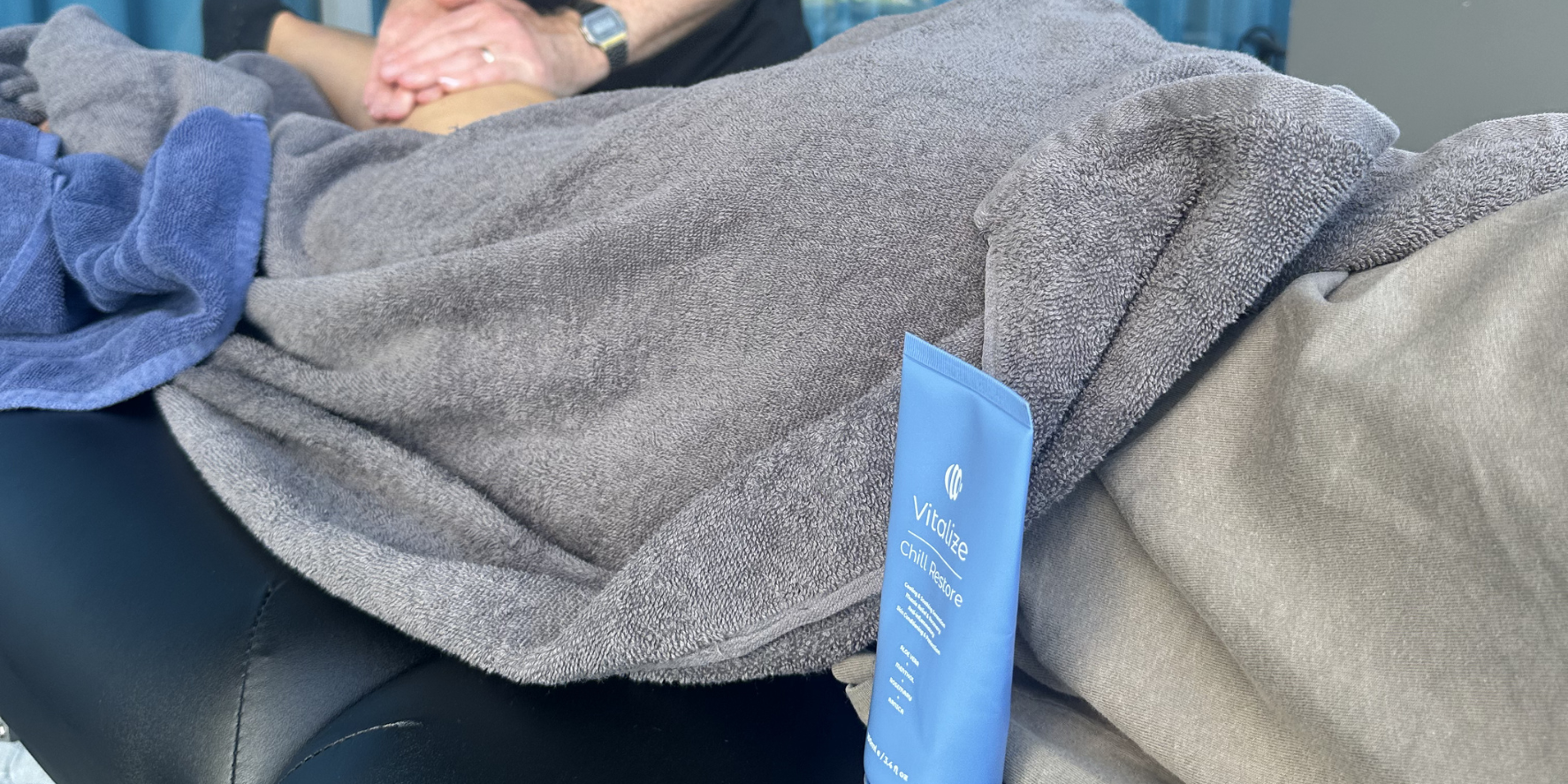
After training or whenever muscles begin feeling tight and sore, apply Vitalize Chill Restore to help provide a cooling sensation while supporting your post-exercise recovery routine.
Many athletes also use Vitalize KnotAway after particularly demanding training sessions to help relax tired muscles as part of their evening recovery ritual.
Combined with hydration, movement, massage, quality nutrition and good sleep, Vitalize can become an easy part of your daily recovery routine—helping you feel ready for your next session.
Recovery Is Where Progress Happens
Training breaks your body down.
Recovery is when your body adapts, becomes stronger, and prepares for the next challenge.
If you're constantly sore, it isn't always a sign that you're training well—it may be a sign that your recovery needs more attention.
Focus on the basics:
✅ Stay hydrated
✅ Eat enough protein
✅ Prioritise sleep
✅ Keep moving
✅ Try massage or contrast therapy
✅ Make Vitalize part of your daily recovery routine
Your future workouts—and your body—will thank you.
Frequently Asked Questions
How long does DOMS last?
Most people experience soreness for 2-5 days, with symptoms usually peaking between 24 and 72 hours after exercise.
Is it okay to exercise with DOMS?
Usually yes, provided the soreness is mild to moderate. Light exercise or training a different muscle group is generally preferable to complete inactivity.
Does stretching prevent DOMS?
Stretching may improve flexibility and help you feel looser, but current evidence suggests it has little effect on preventing or reducing DOMS by itself. Active recovery, massage and contrast therapy have stronger evidence for reducing soreness.
Can Vitalize help after exercise?
Vitalize products are designed to complement your overall recovery routine. When combined with hydration, nutrition, sleep and active recovery, they provide an easy way to support your post-workout recovery ritual.
Share:
Vitalize x ALLFIT NZ
Vitalize Takes Another Major Step Forward: Now Supplying ProPharma NZ